The Fitting Room
Swimwear that knows its place: what Rio asks you to wear
Farm Rio’s prints, a T-shirt for the Christ, slippers in Petrópolis and the seafront palace pools.
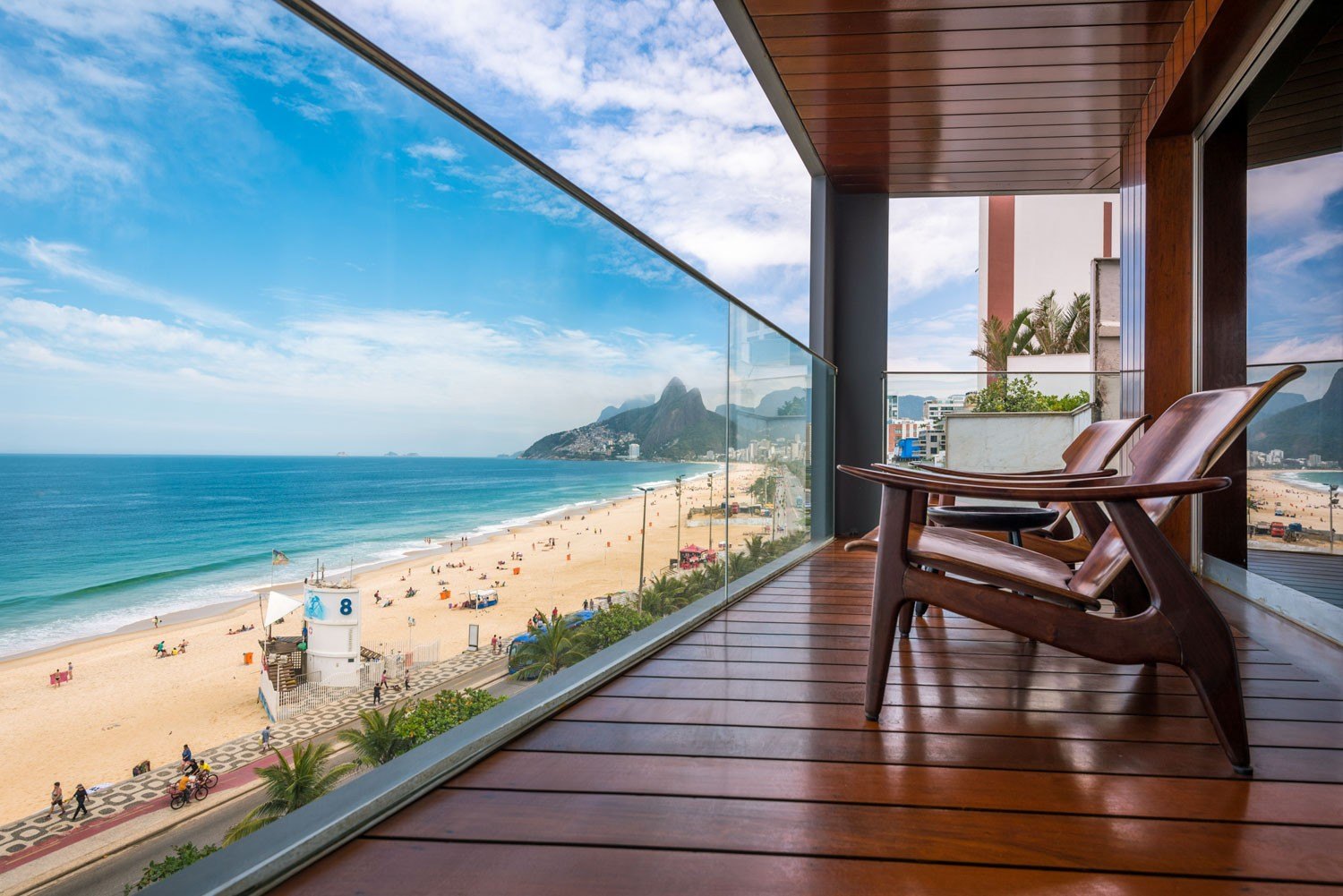
Photo Credit
Image courtesy of © Hotel Fasano Rio de JaneiroRio’s beach sets almost no dress code, and the rules begin where the sand ends: the sanctuary at the Corcovado turns away swimwear, and a museum in Petrópolis hands you slippers. Here is what the climate and the city’s venues really ask of you, from the market stand where Farm Rio began in 1997 to the palace pools of Copacabana and Ipanema.
A label born at a market
Rio dresses for the beach and then, with some reluctance, for everything else. The city’s own label shows how. In 1997 two friends, Kátia Barros and Marcello Bastos, set up a stand for a brand called FARM at the Babilônia Feira Hype, a market for independent designers; Farm Rio grew from it into a label of bright tropical prints and easy dresses, and made its first international landing in New York in 2019.
Its dresses are what the climate asks for: light, loose, quick to dry and cheerful enough to forgive a crease. Its shops are in Ipanema and across the city, which saves you packing for Rio at all. There is something to be said for buying the uniform on arrival.
Swimwear, and where it stops
The beach sets its own dress code, which is to say almost none. The rules begin where the sand ends. At the Corcovado, the sanctuary of Christ the Redeemer asks visitors to wear clothes compatible with its sacred character, and not to stay shirtless or in swimwear, bikini or sunga, anywhere in the visiting areas.
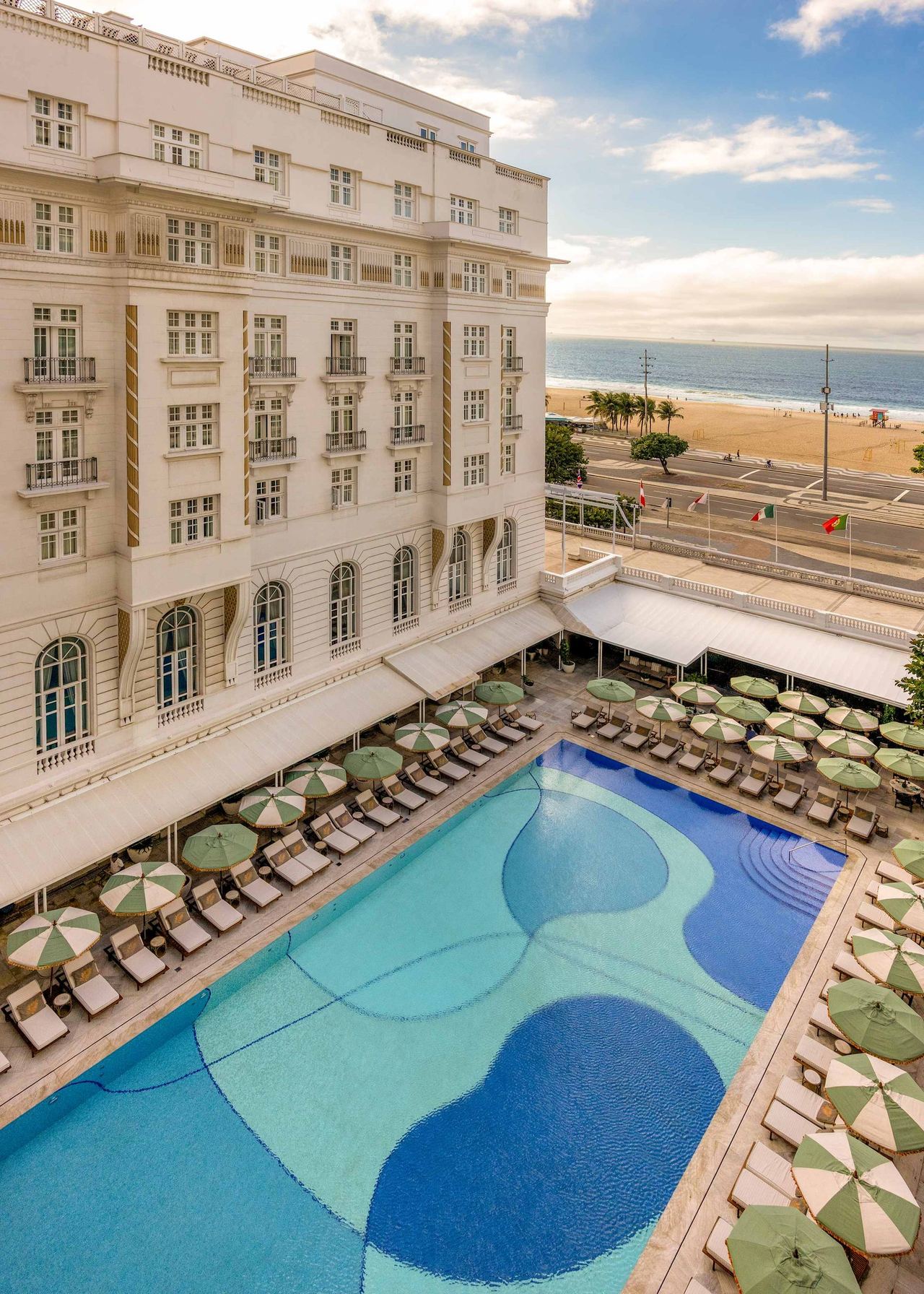
Photo Credit
Image courtesy of © Copacabana Palace, A Belmond HotelIt is a fair request. The statue has stood there in a long robe since 1931; the least you can do is put on a T-shirt. Carry a shirt and a pair of shorts in your beach bag, and the same outfit will take you from Ipanema to the Christ by the official vans in an afternoon.
Up in Petrópolis, the Museu Imperial adds a last flourish: visitors to the palace wear the museum’s slippers, to protect floors of Carrara marble, Belgian marble and fine woods. It is a rare dress code that applies to your feet rather than your shoulders.
The statue has stood there in a long robe since 1931; the least you can do is put on a T-shirt.
The pool as a dress code
Rio’s grand hotels treat the pool as the real resort. At the Copacabana Palace, which Belmond dates to 1923, the half-Olympic pool sits between the white façade and the Avenida Atlântica, and the new Bar do Copa beside it is, in Belmond’s words, the ideal place to people-watch over an early-evening cocktail. Here, a good cover-up does the work of a jacket.

Photo Credit
Image courtesy of © Rjcastillo · CC BY 4.0 via Wikimedia CommonsOn the Ipanema seafront, the Hotel Fasano Rio de Janeiro takes the idea to the roof: loungers on a pool deck under a wall of curved mirrors that reflect the sea, and suite balconies furnished with a Sergio Rodrigues armchair facing the Dois Irmãos. The mirrors double the view, and very possibly the number of people checking their reflection.
Gold for the evening
For the evening, Rio adds gold rather than layers. H.Stern, founded in Rio in 1945, made its name on Brazil’s coloured gemstones, and still makes its jewellery in its own workshops; its headquarters stand on the Rua Visconde de Pirajá, a block from the beach, where the Rua Garcia d’Ávila crosses with the luxury houses of Ipanema.
So what does the climate ask of you? Less than you packed: linen, a print, swimwear that knows its place, and one good piece of jewellery. Our advice: buy a dress or shirt at Farm Rio on your first day, keep a T-shirt in the beach bag for the Corcovado, and leave the jacket at home.
Why it's on our list
- A label born at a market
- Swimwear, and where it stops
- The pool as a dress code
- Gold for the evening
Location
The map comes from Google Maps, which sets its own cookies once it loads.
More in depth
 The back storyFrom the Palace to the Churrascaria: Dining in Rio’s Grand HotelsMee and Lumio at the Copacabana Palace, Gero at the Fasano, and the churrascarias of the Zona Sul.
 The back storyMirrors, beans and açaí: Rio’s cafés, the back storyFrom Casa Cavé in 1860 to the Colombo’s mirrors and Ipanema’s roasters: how Rio drinks coffee.
 The back storySamba, Bossa and the Sea Wall: a Night Out in RioSunset at Urca, cachaça in Leblon, bossa nova in Copacabana and samba in Lapa: Rio by night.